 Jobsumopa
For many foreign job‑seekers, the idea of working abroad in Europe may evoke images of high‑skilled roles in tech or finance. But the reality is that there are unskilled or entry‑level labour roles in Europe that can also be accessible to foreigners, if you know where to look, what to expect, and how to prepare.
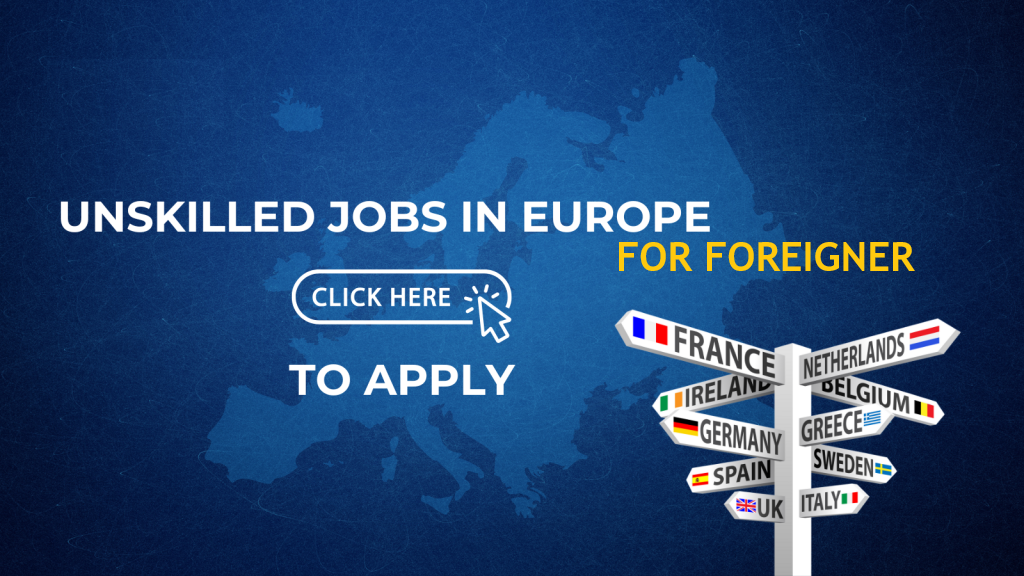
In this guide we’ll explore the opportunities, the challenges, and the practical steps to apply for unskilled jobs in Europe as a foreigner, including visa considerations, major hiring sectors, and tips for success.
1. What counts as an “unskilled job”?
Unskilled” is a relative term — these are positions that generally require little formal qualification or specialised training, though you’ll still need basic reliability, ability to follow instructions, often physical fitness, and sometimes language skills. Common examples across Europe include warehouse assistants, cleaning staff, farm or agricultural workers, hospitality assistants, assembly‑line operatives, and general labourers.
It’s important to note: unskilled does not mean “no expectations”. Many roles still expect you to work shifts, stand for many hours, possibly move countries or regions, and comply with local employment laws.
2. Why Europe? The opportunity for foreign job‑seekers
Europe remains a destination for many foreign job‑seekers because:
- Many industries (agriculture, logistics, hospitality) have labour shortages in certain countries and are hiring entry‑level staff.
- Some countries and recruiters offer visa sponsorship or assistance for foreign unskilled workers.
- You may gain full‑time work, stable pay, and a European employer, which can open doors to settling, upgrading skills, and even advancing later.
That said: you will need to weigh cost of living, language needs, location, and your own mobility flexibility.
3. Which European countries are hiring for unskilled jobs for foreigners?
3.1 The Netherlands
Entry‑level roles in logistics, warehousing and general labour are available for foreign workers in the Netherlands.
Recruitment agencies often state “unskilled doesn’t mean unwanted”.
3.2 Germany
Although Germany focuses more on skilled migration, there are still roles for foreigners in cleaning, warehouse, hospitality, kitchen assistance etc.
3.3 Romania
In countries like Romania you will find warehouse work, packing, factory help, supermarket shelf‑stocking roles which welcome foreigners.
3.4 Luxembourg & others
Luxembourg, for example, explicitly lists unskilled jobs with visa sponsorship for non‑EU nationals in retail, cleaning, HORECA (hotel/restaurant/café) sector.
3.5 Other EU countries & seasonal roles
Many countries recruit for agriculture or seasonal hospitality work (Spain, Italy, Poland) with relatively low bar of entry.
4. Visa, work permit & legal factors for foreign applicants
4.1 Work permit / visa prerequisites
If you are non‑EU/EEA, before accepting a job you must ensure the country’s immigration rules permit for unskilled labour for foreigners. Some countries have quotas or “labour market test” to show no local worker could fill the role.
4.2 Sponsorship
Some employers will sponsor your visa or help with relocation / permit paperwork. This is more rare in unskilled jobs than in skilled, but it does happen.
4.3 Language & local integration
Even for entry roles, you may need basic knowledge of local or common language (English may suffice in some). Some roles still expect you to be able to communicate, follow instructions, work as part of team.
4.4 Rights & obligations
Foreign workers must comply with local tax, social security, working hour rules and must be legally employed (contract, pay, conditions) — avoid informal work without proper visa. Some portals emphasise “legal work authorisation”.
4.5 Seasonal vs permanent
Many “unskilled” positions for foreigners are seasonal (agriculture, tourism) rather than permanent. If you aim to settle, check that route.
5. How to find and apply for unskilled jobs in Europe as a foreigner
5.1 Job‑boards & recruitment agencies
Use portals specialising in foreign‑worker roles or visa‑sponsored roles. Keywords to search: “unskilled jobs Europe foreigners”, “warehouse jobs visa sponsorship Europe”, “farm worker non‑EU citizen Europe”. Agencies in Netherlands/Poland etc often handle foreign placement.
5.2 Crafting your application
Even for unskilled roles, your CV matters: highlight reliability, willingness to relocate, any previous labour/physical work experience, language knowledge, work permit status (if you already have it) or your openness to move.
5.3 Preparing for relocation & interview
Ask about accommodation, shift patterns, overtime, transport, and whether the employer assists with visa or relocation costs. Be ready to discuss your mobility and willingness to start quickly.
5.4 Avoid scams
Be cautious of job offers that require large upfront payment or sound too good to be true. Always verify employer, contract, rights.
5.5 Timing & seasonality
Some roles fill fast (especially seasonal) and demand peaks (tourism/hospitality). Apply early, mark deadlines.
6. Typical unskilled job types & what to expect
| Job Type | Typical Duties | What Foreign Applicants Should Know |
| Warehouse / logistics worker | Packing, loading, sorting goods, inventory support. | Often physical, may involve shift work, must handle manual tasks. |
| Cleaning / housekeeping | Cleaning hotel rooms, offices, private homes, HORECA venues. | Need to be reliable, sometimes night/early shifts, may require basic language. |
| Farm/agribusiness labour | Picking fruit/vegetables, farm maintenance, seasonal labour. | Seasonal nature, may include accommodation, rural location, less pay than urban skilled jobs. |
| Hospitality assistance | Kitchen assistant, waiter/waitress support, hotel service staff. | Customer‑facing roles may require more language or personality skills. |
| Retail / shelf‑stocking | Putting out items, cashier support, stocking shelves in supermarkets. | May be part‑time, may require weekend/evening shifts. |
What pay and conditions might look like
Pay is generally lower than skilled roles, but in some countries entry‑level wages still provide decent living especially if accommodation or transport is included. For example, in Germany unskilled roles like warehouse/cleaner are reported at roughly €8‑14 per hour depending on region and job type.
Working hours, shift patterns, overtime possibilities and accommodation must all be evaluated carefully.
7. Challenges and how to overcome them
7.1 Language barrier
If you don’t speak the local language, you may be disadvantaged in hospitality, customer‑facing, or remote rural roles. Consider basic local language courses or choose roles where English suffices.
7.2 Visa & legal barriers
Work permits for unskilled jobs may be limited in some countries or require that employer demonstrates local worker shortage. Research beforehand.
7.3 Cultural / relocation adaptation
Moving to a different country means new norms, work culture, living environment. Expect adjustment period.
7.4 Pay vs cost of living
Ensure that the wage offered covers living costs (rent, food, transport) in that country and city. Some jobs may be low‑paying in high cost areas.
7.5 Seasonal/unstable nature
Many unskilled jobs for foreigners are seasonal or temporary; long‑term stability may be weaker. If long‑term residence is your goal, plan accordingly.
8. Tips to boost your chances as a foreign applicant
- Update your CV and emphasise mobility, reliability, physical stamina, shift‑work experience, and willingness to relocate.
- Use keywords in job search like “visa sponsorship”, “non‑EU applicant”, “no experience required”, “entry‑level”.
- Apply broadly to roles and across countries if you are flexible.
- Research companies/industries known to hire foreigners for unskilled roles (logistics hubs, hospitality chains, large supermarkets).
- Be ready to move quickly when you get an offer — delays may cost you the role.
- Prepare questions for the employer about accommodation, transport, start date, visa/permit support.
- Consider roles in smaller cities/less competitive regions where demand is higher and fewer applicants.
- If you get the role, seek to build your experience: even an unskilled job can lead to better positions later if you apply yourself.
9. Now ready to apply: your checklist
- Choose target country(ies) based on your preferences — language, cost of living, job demand.
- Confirm work permit/visa eligibility for your country of origin in that destination.
- Create/optimise your CV, emphasising relevant attributes.
- Search job boards and agencies specialising in foreign labour/entry‑level roles.
- Apply to roles promptly, tracking you applications, responses and follow‑up.
- Once you receive an offer, review contract, accommodation/benefit details, start date, legal status.
- Plan relocation: flights, housing, transport, local registration, banking.
- On arrival, integrate quickly: punctuality, team‑oriented, learn basics of local language & culture, keep employer informed if issues.
- After settling, explore upskilling paths (language, certifications, internal promotions) for better roles.
10. Conclusion
If you’re a foreigner seeking to work in Europe but you don’t have high‑level qualifications or specialised training, don’t be discouraged — there are unskilled job opportunities out there. By understanding how to search, apply, move, and integrate, you can secure an entry‑level role and use it as a stepping stone. The key is to be proactive, mobile, realistic and prepared. Good luck with your European job search!


 Jobsumopa